

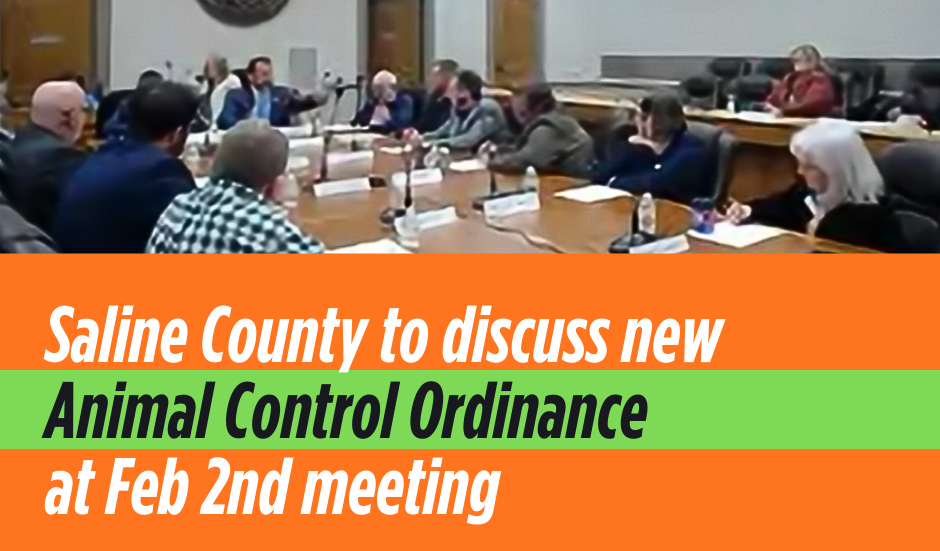
Saline County government will meet to discuss solutions for the animal control issue in the community. The Public Works and Safety Committee, along with the Finance Committee will meet on Monday, February 2nd, 2026 in a special called meeting to discuss animal control.
Here’s what’s in this article:
- 🐕 1 & 2: Learn the current animal situation and tools the County has available.
- 🫱🏼🫲🏼 3: Read the meeting agenda and details
- 📺 4: Watch the video where the Quorum Court discussed animal control in their January meeting, and
- ⚖️ 5: Read the proposed new ordinance for Animal Control (for discussion only).
There have been countless incidents of animal dumping, vicious animals, and just strays who cause nuisance or property damage.
1. What tools does the County have available?
The county has an animal ordinance, but it only addresses vicious animals.
The county does not have an animal shelter. Some may believe the Humane Society of Saline County is the county’s shelter, but it is a separate, non-profit entity, not operated by the government.
2. What about a tax?
There was an election held in 2008 for a tax to address animal control, but it was voted down. According to the Arkansas Democrat-Gazette, the election results were 14,630 votes FOR, and 28,822 AGAINST a “0.125 percent sales and use tax for animal control.”
In 2014, County leaders passed an ordinance for a voluntary tax. Property owners may opt to pay into any of three voluntary funds when they pay their property tax.
Those funds are:
- Animal Care & Control – $5.00/year,
- Weather Warning System – $5.00/year, and
- Saline County Detention Center – $10.00/year.
Read more about those funds at www.mysaline.com/property-tax.
The following is the Saline County Ordinance for the Voluntary Tax for Animal Care and Control (click image to enlarge):
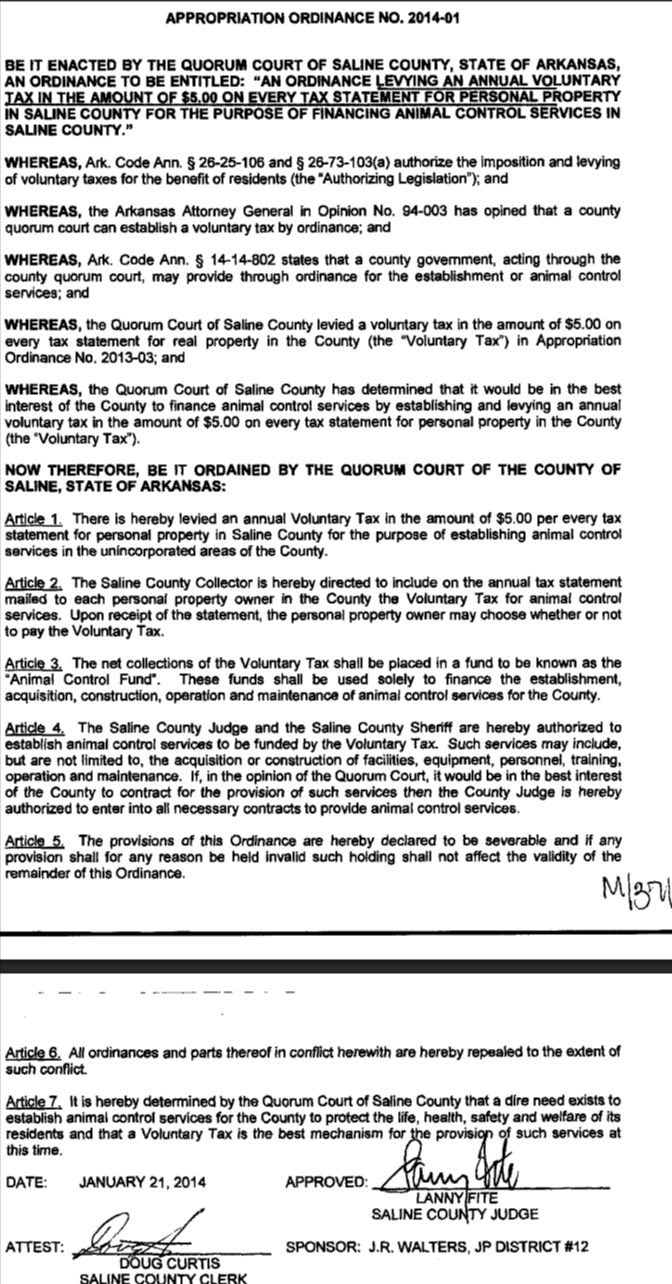
Saline County Judge Matt Brumley, stated (in the video below at approximately 19:45) that the current balance in the Animal Control fund is approximately $56,970. In a county with 83,424 parcels of property (according to the Saline County Assessor’s Office), if the $5 voluntary tax for animal care & control was paid for every parcel, that would be over $417,000 per year coming into the fund.
3. Video of recent discussion by County Officials:
The discussion of a new animal ordinance begins at 16:22 in the video.
4. Upcoming special meeting on animal control:
After one recent death of a teen girl and then the mauling of a girl and her mother, county government officials will convene to search for a solution.
The meeting is Feb 2, 2026. It will begin at 6:00 P.M. in Courtroom #3. Doors will open at 5:45 P.M.
You may enter the Courthouse via the Main Street Entrance and/or Market St. Entrance. Note the Market St. Entrance is ADA accessible.
Meeting Agenda
Public Works and Safety Committee
-
- Call meeting to Order
- Approval of Minutes
- Discussion: Animal Control (For Discussion Only – Committee members will not be voting)
Finance Committee Meeting:
-
- Approval of Minutes
- Add-on:
- Other Business:
5. See the Proposed new Ordinance below.
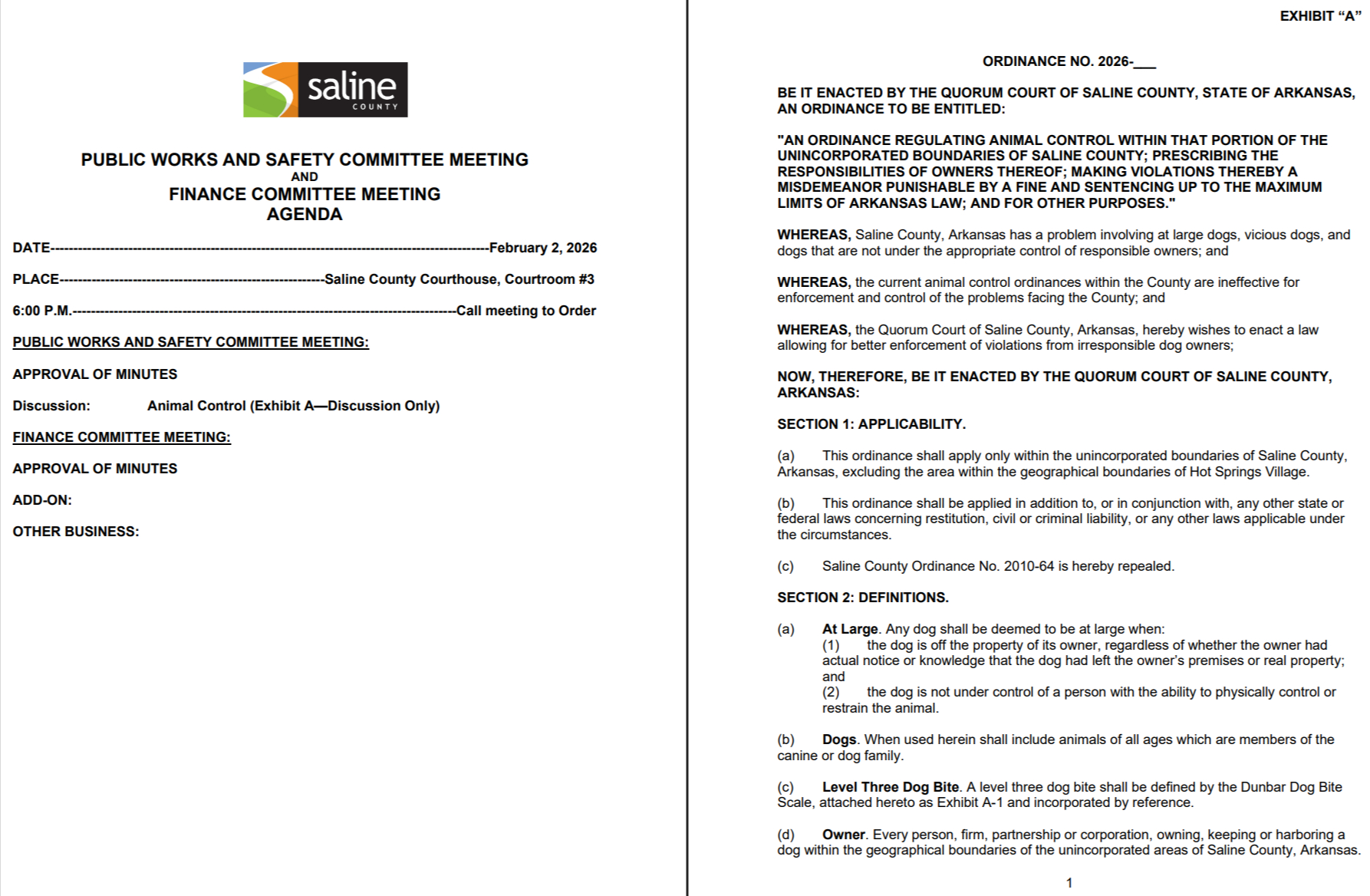
READ THE PROPOSED ANIMAL CONTROL ORDINANCE in the screenshots, or scroll to the text below.
SCREENSHOT
VERSION:
-
- Feb 2 Agenda + Page 1 of Ordinance
-
- Page 2 & 3 of Ordinance
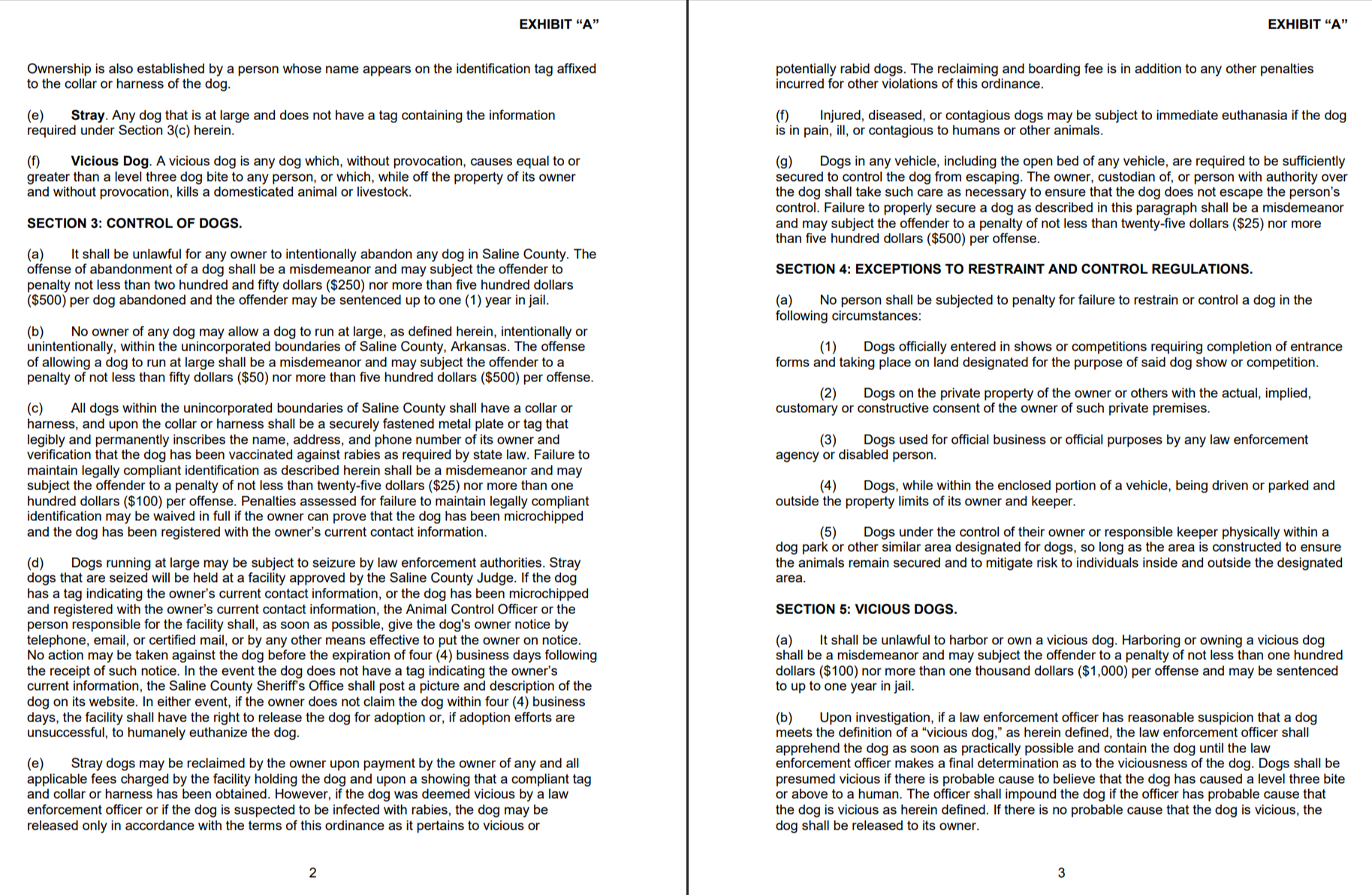
-
- Page 4 & 5 of Ordinance
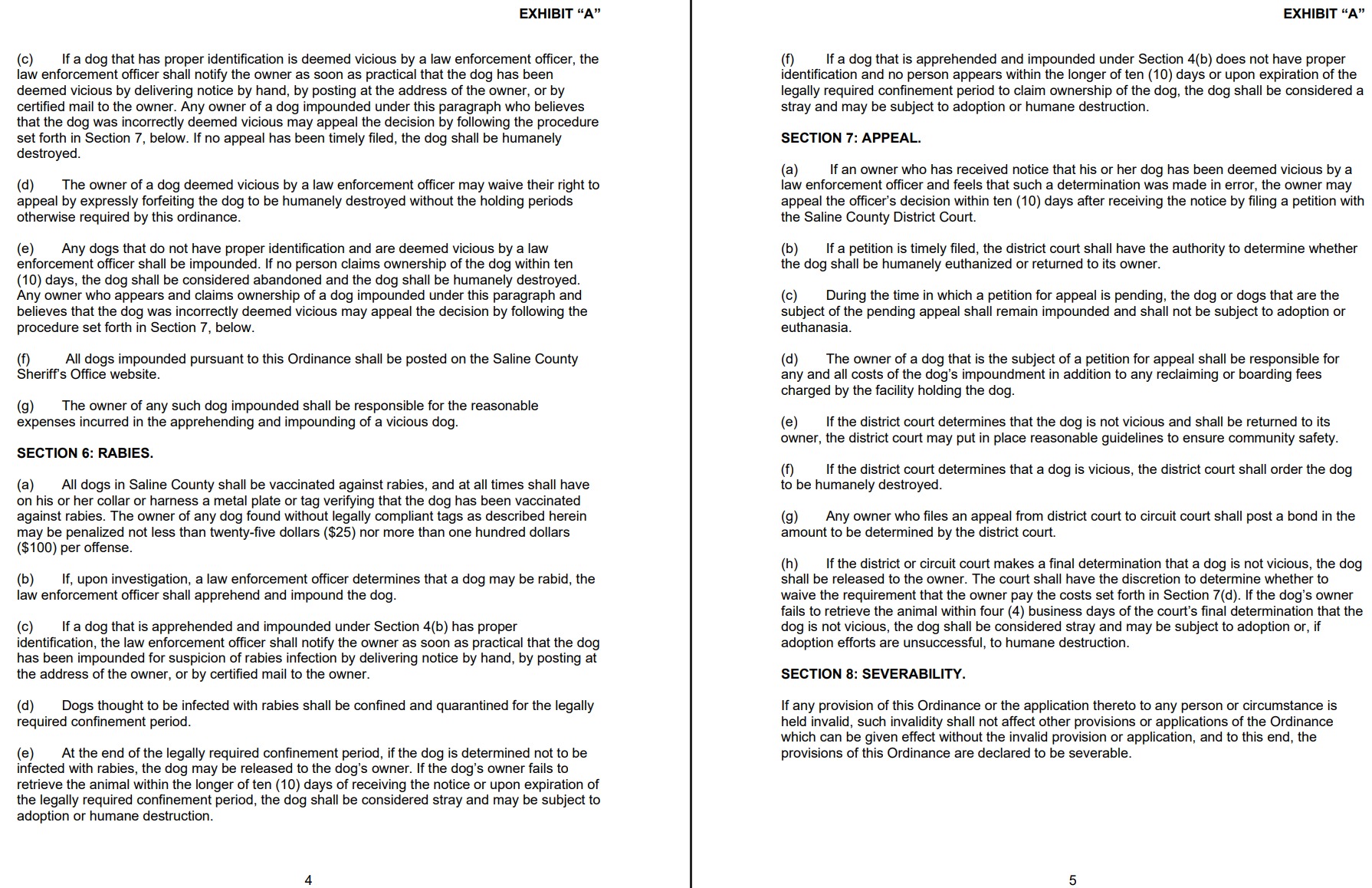
-
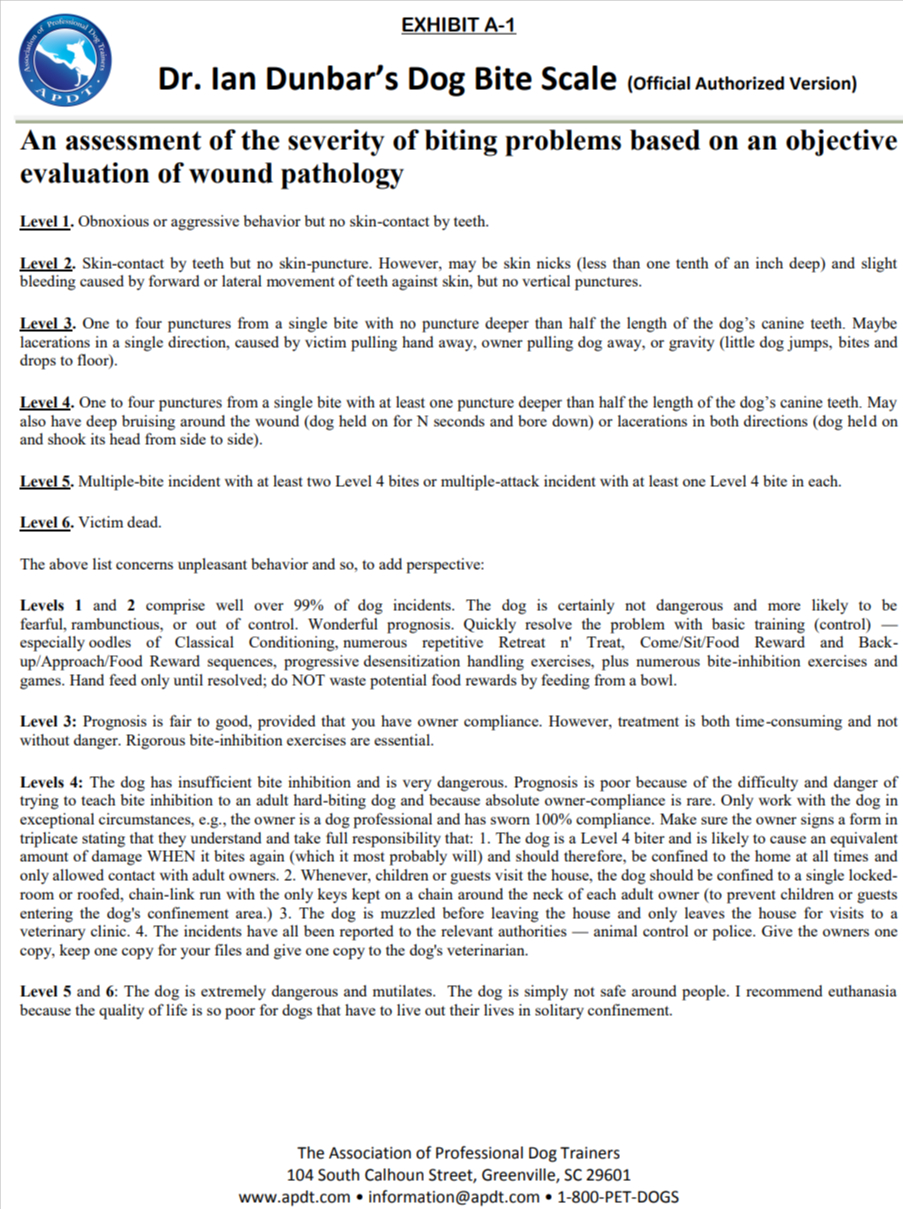
- Dr. Ian Dunbar’s Dog Bite Scale
TEXT
VERSION:
ORDINANCE NO. 2026-___
Be it enacted by the Quorum Court Of Saline County, State of Arkansas, an ordinance to be entitled:
“An ordinance regulating animal control within that portion of the unincorporated boundaries of saline county; prescribing the responsibilities of owners thereof; making violations thereby a misdemeanor punishable by a fine and sentencing up to the maximum limits of Arkansas law; and for other purposes.”
WHEREAS, Saline County, Arkansas has a problem involving at large dogs, vicious dogs, and dogs that are not under the appropriate control of responsible owners; and
WHEREAS, the current animal control ordinances within the County are ineffective for enforcement and control of the problems facing the County; and WHEREAS, the Quorum Court of Saline County, Arkansas, hereby wishes to enact a law allowing for better enforcement of violations from irresponsible dog owners;
NOW, THEREFORE, BE IT ENACTED BY THE QUORUM COURT OF SALINE COUNTY, ARKANSAS:
SECTION 1: APPLICABILITY.
(a) This ordinance shall apply only within the unincorporated boundaries of Saline County, Arkansas, excluding the area within the geographical boundaries of Hot Springs Village.
(b) This ordinance shall be applied in addition to, or in conjunction with, any other state or federal laws concerning restitution, civil or criminal liability, or any other laws applicable under the circumstances.
(c) Saline County Ordinance No. 2010-64 is hereby repealed.
SECTION 2: DEFINITIONS.
(a) At Large. Any dog shall be deemed to be at large when:
(1) the dog is off the property of its owner, regardless of whether the owner had actual notice or knowledge that the dog had left the owner’s premises or real property; and
(2) the dog is not under control of a person with the ability to physically control or restrain the animal.
(b) Dogs. When used herein shall include animals of all ages which are members of the canine or dog family.
(c) Level Three Dog Bite. A level three dog bite shall be defined by the Dunbar Dog Bite Scale, attached hereto as Exhibit A-1 and incorporated by reference.
(d) Owner. Every person, firm, partnership or corporation, owning, keeping or harboring a dog within the geographical boundaries of the unincorporated areas of Saline County, Arkansas. Ownership is also established by a person whose name appears on the identification tag affixed to the collar or harness of the dog.
(e) Stray. Any dog that is at large and does not have a tag containing the information required under Section 3(c) herein.
(f) Vicious Dog. A vicious dog is any dog which, without provocation, causes equal to or greater than a level three dog bite to any person, or which, while off the property of its owner and without provocation, kills a domesticated animal or livestock.
SECTION 3: CONTROL OF DOGS.
(a) It shall be unlawful for any owner to intentionally abandon any dog in Saline County. The offense of abandonment of a dog shall be a misdemeanor and may subject the offender to penalty not less than two hundred and fifty dollars ($250) nor more than five hundred dollars ($500) per dog abandoned and the offender may be sentenced up to one (1) year in jail.
(b) No owner of any dog may allow a dog to run at large, as defined herein, intentionally or unintentionally, within the unincorporated boundaries of Saline County, Arkansas. The offense of allowing a dog to run at large shall be a misdemeanor and may subject the offender to a penalty of not less than fifty dollars ($50) nor more than five hundred dollars ($500) per offense.
(c) All dogs within the unincorporated boundaries of Saline County shall have a collar or harness, and upon the collar or harness shall be a securely fastened metal plate or tag that legibly and permanently inscribes the name, address, and phone number of its owner and verification that the dog has been vaccinated against rabies as required by state law. Failure to maintain legally compliant identification as described herein shall be a misdemeanor and may subject the offender to a penalty of not less than twenty-five dollars ($25) nor more than one hundred dollars ($100) per offense. Penalties assessed for failure to maintain legally compliant identification may be waived in full if the owner can prove that the dog has been microchipped and the dog has been registered with the owner’s current contact information.
(d) Dogs running at large may be subject to seizure by law enforcement authorities. Stray dogs that are seized will be held at a facility approved by the Saline County Judge. If the dog has a tag indicating the owner’s current contact information, or the dog has been microchipped and registered with the owner’s current contact information, the Animal Control Officer or the person responsible for the facility shall, as soon as possible, give the dog’s owner notice by telephone, email, or certified mail, or by any other means effective to put the owner on notice. No action may be taken against the dog before the expiration of four (4) business days following the receipt of such notice. In the event the dog does not have a tag indicating the owner’s current information, the Saline County Sheriff’s Office shall post a picture and description of the dog on its website. In either event, if the owner does not claim the dog within four (4) business days, the facility shall have the right to release the dog for adoption or, if adoption efforts are unsuccessful, to humanely euthanize the dog.
(e) Stray dogs may be reclaimed by the owner upon payment by the owner of any and all applicable fees charged by the facility holding the dog and upon a showing that a compliant tag and collar or harness has been obtained. However, if the dog was deemed vicious by a law enforcement officer or if the dog is suspected to be infected with rabies, the dog may be released only in accordance with the terms of this ordinance as it pertains to vicious or potentially rabid dogs. The reclaiming and boarding fee is in addition to any other penalties incurred for other violations of this ordinance.
(f) Injured, diseased, or contagious dogs may be subject to immediate euthanasia if the dog is in pain, ill, or contagious to humans or other animals.
(g) Dogs in any vehicle, including the open bed of any vehicle, are required to be sufficiently secured to control the dog from escaping. The owner, custodian of, or person with authority over the dog shall take such care as necessary to ensure that the dog does not escape the person’s control. Failure to properly secure a dog as described in this paragraph shall be a misdemeanor and may subject the offender to a penalty of not less than twenty-five dollars ($25) nor more than five hundred dollars ($500) per offense.
SECTION 4: EXCEPTIONS TO RESTRAINT AND CONTROL REGULATIONS.
(a) No person shall be subjected to penalty for failure to restrain or control a dog in the following circumstances:
(1) Dogs officially entered in shows or competitions requiring completion of entrance forms and taking place on land designated for the purpose of said dog show or competition.
(2) Dogs on the private property of the owner or others with the actual, implied, customary or constructive consent of the owner of such private premises.
(3) Dogs used for official business or official purposes by any law enforcement agency or disabled person.
(4) Dogs, while within the enclosed portion of a vehicle, being driven or parked and outside the property limits of its owner and keeper.
(5) Dogs under the control of their owner or responsible keeper physically within a dog park or other similar area designated for dogs, so long as the area is constructed to ensure the animals remain secured and to mitigate risk to individuals inside and outside the designated area.
SECTION 5: VICIOUS DOGS.
(a) It shall be unlawful to harbor or own a vicious dog. Harboring or owning a vicious dog shall be a misdemeanor and may subject the offender to a penalty of not less than one hundred dollars ($100) nor more than one thousand dollars ($1,000) per offense and may be sentenced to up to one year in jail.
(b) Upon investigation, if a law enforcement officer has reasonable suspicion that a dog meets the definition of a “vicious dog,” as herein defined, the law enforcement officer shall apprehend the dog as soon as practically possible and contain the dog until the law enforcement officer makes a final determination as to the viciousness of the dog. Dogs shall be presumed vicious if there is probable cause to believe that the dog has caused a level three bite or above to a human. The officer shall impound the dog if the officer has probable cause that the dog is vicious as herein defined. If there is no probable cause that the dog is vicious, the dog shall be released to its owner.
(c) If a dog that has proper identification is deemed vicious by a law enforcement officer, the law enforcement officer shall notify the owner as soon as practical that the dog has been deemed vicious by delivering notice by hand, by posting at the address of the owner, or by certified mail to the owner. Any owner of a dog impounded under this paragraph who believes that the dog was incorrectly deemed vicious may appeal the decision by following the procedure set forth in Section 7, below. If no appeal has been timely filed, the dog shall be humanely destroyed.
(d) The owner of a dog deemed vicious by a law enforcement officer may waive their right to appeal by expressly forfeiting the dog to be humanely destroyed without the holding periods otherwise required by this ordinance.
(e) Any dogs that do not have proper identification and are deemed vicious by a law enforcement officer shall be impounded. If no person claims ownership of the dog within ten (10) days, the dog shall be considered abandoned and the dog shall be humanely destroyed. Any owner who appears and claims ownership of a dog impounded under this paragraph and believes that the dog was incorrectly deemed vicious may appeal the decision by following the procedure set forth in Section 7, below.
(f) All dogs impounded pursuant to this Ordinance shall be posted on the Saline County Sheriff’s Office website.
(g) The owner of any such dog impounded shall be responsible for the reasonable expenses incurred in the apprehending and impounding of a vicious dog.
SECTION 6: RABIES.
(a) All dogs in Saline County shall be vaccinated against rabies, and at all times shall have on his or her collar or harness a metal plate or tag verifying that the dog has been vaccinated against rabies. The owner of any dog found without legally compliant tags as described herein may be penalized not less than twenty-five dollars ($25) nor more than one hundred dollars ($100) per offense. (b) If, upon investigation, a law enforcement officer determines that a dog may be rabid, the law enforcement officer shall apprehend and impound the dog.
(c) If a dog that is apprehended and impounded under Section 4(b) has proper identification, the law enforcement officer shall notify the owner as soon as practical that the dog has been impounded for suspicion of rabies infection by delivering notice by hand, by posting at the address of the owner, or by certified mail to the owner.
(d) Dogs thought to be infected with rabies shall be confined and quarantined for the legally required confinement period. (e) At the end of the legally required confinement period, if the dog is determined not to be infected with rabies, the dog may be released to the dog’s owner. If the dog’s owner fails to retrieve the animal within the longer of ten (10) days of receiving the notice or upon expiration of the legally required confinement period, the dog shall be considered stray and may be subject to adoption or humane destruction.
(f) If a dog that is apprehended and impounded under Section 4(b) does not have proper identification and no person appears within the longer of ten (10) days or upon expiration of the legally required confinement period to claim ownership of the dog, the dog shall be considered a stray and may be subject to adoption or humane destruction.
SECTION 7: APPEAL.
(a) If an owner who has received notice that his or her dog has been deemed vicious by a law enforcement officer and feels that such a determination was made in error, the owner may appeal the officer’s decision within ten (10) days after receiving the notice by filing a petition with the Saline County District Court.
(b) If a petition is timely filed, the district court shall have the authority to determine whether the dog shall be humanely euthanized or returned to its owner.
(c) During the time in which a petition for appeal is pending, the dog or dogs that are the subject of the pending appeal shall remain impounded and shall not be subject to adoption or euthanasia.
(d) The owner of a dog that is the subject of a petition for appeal shall be responsible for any and all costs of the dog’s impoundment in addition to any reclaiming or boarding fees charged by the facility holding the dog.
(e) If the district court determines that the dog is not vicious and shall be returned to its owner, the district court may put in place reasonable guidelines to ensure community safety.
(f) If the district court determines that a dog is vicious, the district court shall order the dog to be humanely destroyed.
(g) Any owner who files an appeal from district court to circuit court shall post a bond in the amount to be determined by the district court.
(h) If the district or circuit court makes a final determination that a dog is not vicious, the dog shall be released to the owner. The court shall have the discretion to determine whether to waive the requirement that the owner pay the costs set forth in Section 7(d). If the dog’s owner fails to retrieve the animal within four (4) business days of the court’s final determination that the dog is not vicious, the dog shall be considered stray and may be subject to adoption or, if adoption efforts are unsuccessful, to humane destruction.
SECTION 8: SEVERABILITY.
If any provision of this Ordinance or the application thereto to any person or circumstance is held invalid, such invalidity shall not affect other provisions or applications of the Ordinance which can be given effect without the invalid provision or application, and to this end, the provisions of this Ordinance are declared to be severable.
EXHIBIT A-1:
Dr. Ian Dunbar’s Dog Bite Scale (Official Authorized Version)
An assessment of the severity of biting problems based on an objective evaluation of wound pathology
Level 1. Obnoxious or aggressive behavior but no skin-contact by teeth.
Level 2. Skin-contact by teeth but no skin-puncture. However, may be skin nicks (less than one tenth of an inch deep) and slight bleeding caused by forward or lateral movement of teeth against skin, but no vertical punctures.
Level 3. One to four punctures from a single bite with no puncture deeper than half the length of the dog’s canine teeth. Maybe lacerations in a single direction, caused by victim pulling hand away, owner pulling dog away, or gravity (little dog jumps, bites and drops to floor).
Level 4. One to four punctures from a single bite with at least one puncture deeper than half the length of the dog’s canine teeth. May also have deep bruising around the wound (dog held on for N seconds and bore down) or lacerations in both directions (dog held on and shook its head from side to side).
Level 5. Multiple-bite incident with at least two Level 4 bites or multiple-attack incident with at least one Level 4 bite in each.
Level 6. Victim dead.
The above list concerns unpleasant behavior and so, to add perspective:
Levels 1 and 2 comprise well over 99% of dog incidents. The dog is certainly not dangerous and more likely to be fearful, rambunctious, or out of control. Wonderful prognosis. Quickly resolve the problem with basic training (control) — especially oodles of Classical Conditioning, numerous repetitive Retreat n’ Treat, Come/Sit/Food Reward and Backup/Approach/Food Reward sequences, progressive desensitization handling exercises, plus numerous bite-inhibition exercises and games. Hand feed only until resolved; do NOT waste potential food rewards by feeding from a bowl. Level 3: Prognosis is fair to good, provided that you have owner compliance. However, treatment is both time-consuming and not without danger. Rigorous bite-inhibition exercises are essential.
Levels 4: The dog has insufficient bite inhibition and is very dangerous. Prognosis is poor because of the difficulty and danger of trying to teach bite inhibition to an adult hard-biting dog and because absolute owner-compliance is rare. Only work with the dog in exceptional circumstances, e.g., the owner is a dog professional and has sworn 100% compliance. Make sure the owner signs a form in triplicate stating that they understand and take full responsibility that: 1. The dog is a Level 4 biter and is likely to cause an equivalent amount of damage WHEN it bites again (which it most probably will) and should therefore, be confined to the home at all times and only allowed contact with adult owners. 2. Whenever, children or guests visit the house, the dog should be confined to a single locked room or roofed, chain-link run with the only keys kept on a chain around the neck of each adult owner (to prevent children or guests entering the dog’s confinement area.) 3. The dog is muzzled before leaving the house and only leaves the house for visits to a veterinary clinic. 4. The incidents have all been reported to the relevant authorities — animal control or police. Give the owners one copy, keep one copy for your files and give one copy to the dog’s veterinarian.
Level 5 and 6: The dog is extremely dangerous and mutilates. The dog is simply not safe around people. I recommend euthanasia because the quality of life is so poor for dogs that have to live out their lives in solitary confinement.
The Association of Professional Dog Trainers, 104 South Calhoun Street, Greenville, SC 29601, www.apdt.com • [email protected] • 1-800-PET-DOGS
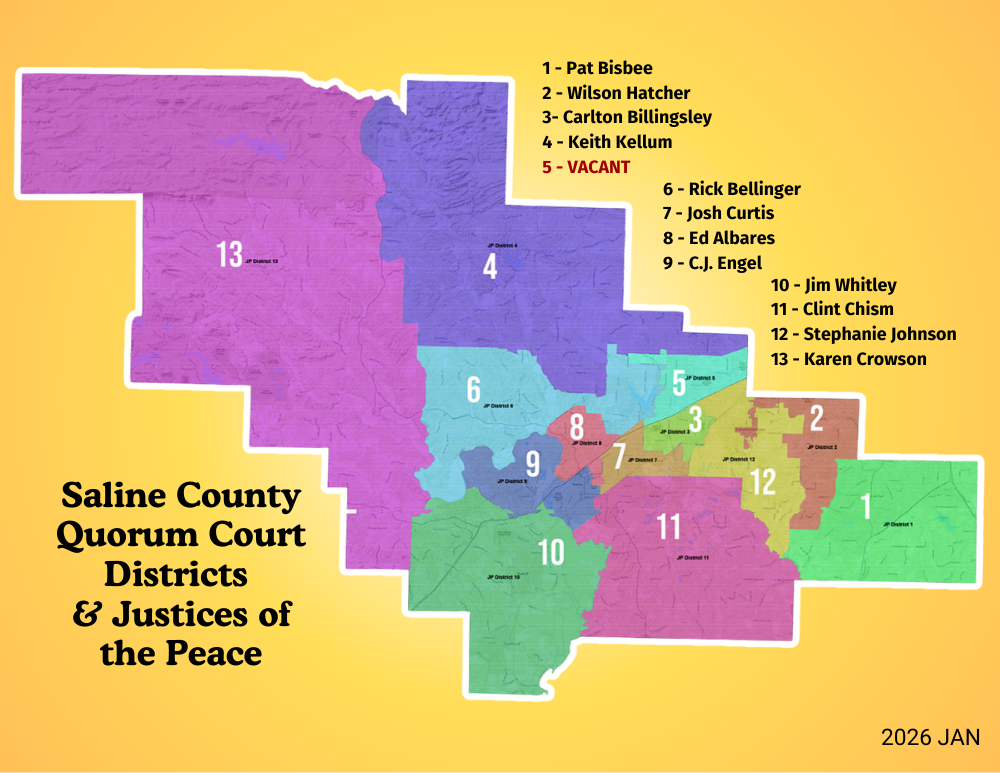
Your list and map of Justices of the Peace:
See the list of the events in Saline County, at www.mysaline.com/events