

How the Ball Bounces with Bekka: The Bench Has Stories, Too
I’ve spent a lot of time in gymnasiums over the years. Playing. Coaching. Watching. Cheering. Occasionally questioning the eyesight of an official.
You know. The usual.
And every once in a while, I find myself watching something that has absolutely nothing to do with the players on the court.
The bench.
Not the coach pacing in front of it. Not the starters waiting to check back in. The kids sitting at the end of it. You know, the ones who might never take off their warm-up shirts.
I’ve watched kids jump to their feet and have a mini party with high fives and fist pumps after a teammate makes a big shot. I’ve watched them celebrate a defensive stop like they were the ones who made it. I’ve watched them yell, encourage, and lose their ever-loving minds over something that happened twenty feet away.
And sometimes, those same kids never step onto the court. Not for one minute. But you’d never know it by the way they celebrate. And I’ve thought about that a lot.
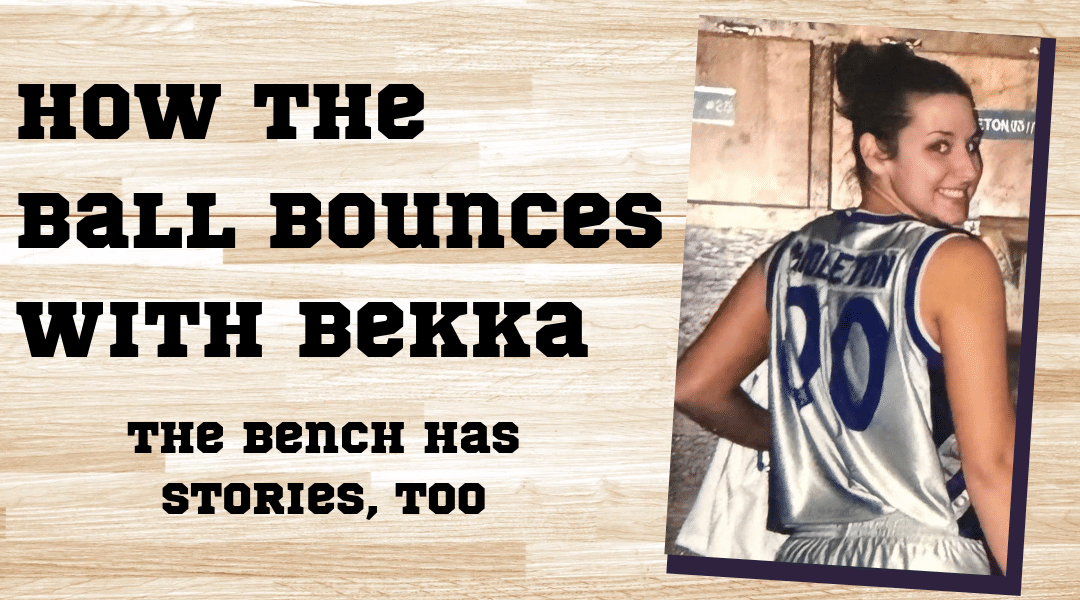
I was fortunate enough to be one of the players who got significant playing time. I knew what it felt like to hear my name called, to be in the game when things mattered, and to have the opportunity to contribute where everybody could see it.
And I also know something else. I didn’t get there by myself.
There’s a part of basketball, and most competitive sports, that most people never see. It’s not under the bright lights on game night. It’s not in the box score. It’s not in the highlight reel, and it’s certainly not very glamorous. It’s the work that happens at practice.
When we were preparing for an opponent, somebody had to become that opponent. Somebody had to learn their plays. Their defenses. Their tendencies. Somebody had to run their offense against us until we knew what was coming. Somebody had to make us work for every basket, every rebound, every possession.
That was the scout team, and those players weren’t just going through the motions. They had to know our system AND the other team’s system. They had to switch roles, learn new assignments, and execute things that might never appear in one of their own games. Their job was to make the team better, and they did it to the absolute best of their ability. Because if they didn’t, the team wouldn’t be nearly as prepared.
Sometimes that meant beating us in practice. Sometimes it meant exposing a weakness we didn’t know we had. Sometimes it meant doing the same thing over and over until we finally figured out how to stop it. And then, when game night arrived, the players who had spent the week preparing us might spend the entire game sitting on the bench.
Cheering on the team and its starters. All guts and no glory, because so much of their most important work had already happened behind the scenes.
READ MORE BELOW
Think about that for a minute. You help somebody prepare for the opportunity you’ve been working toward yourself. And when their moment comes, you celebrate it like it’s your own.
That’s not a small thing. That’s a special kind of teammate.
Now, I don’t want to romanticize sitting on the bench. Every athlete wants to play. Every kid wants their chance. And there’s nothing wrong with wanting more minutes, more opportunities, or a bigger role. In fact, I’d be a little concerned about a player who didn’t.
But there’s a difference between wanting a bigger role and refusing to give everything you’ve got to the one you have. And that’s what those kids in the gym reminded me. They weren’t waiting until they became starters to be good teammates. They were doing it right then.
With every cheer. Every high five. Every practice rep. Every moment they helped somebody else succeed.
Somewhere along the way, we started measuring contribution almost entirely by what shows up on a scoreboard.
Points. Rebounds. Assists. Minutes played.
But a scoreboard can’t tell you who ran the scout team offense so well that the starters recognized a play before it developed. It can’t tell you who stayed after practice to help a teammate. It can’t tell you who kept the energy up when everybody else was exhausted. And it certainly can’t tell you who celebrated the loudest when somebody else’s hard work paid off.
There’s a lesson in that, and it goes well beyond basketball.
Not everybody gets the starting position. Not everybody gets the spotlight. And sometimes the role you’re asked to play isn’t the one you would have chosen for yourself. But whatever that role is, you get to decide how you’re going to play it.
You can spend your time wishing you had somebody else’s job, or you can take ownership of yours and do it so well that the whole team is better because you’re there.
First team. Second team. Scout team. It all matters.
And the next time you’re at a basketball game, I want you to watch the end of the bench for a little while. Watch the kid who jumps up before anybody else when a teammate scores. Watch the one who’s the first to offer a high five when somebody comes off the court. Watch the player who hasn’t checked into the game but hasn’t checked out of it for a single second.
Because that kid might not score a point tonight. But don’t mistake that for not contributing to the win.
And that’s how the ball really bounces.
Read more from How the Ball Bounces with Bekka in the archives at www.mysaline.com/bounces.
 About the author: Bekka Wilkerson is a lifelong lover of all things sports. Raised in a super athletic household it was no surprise when she too began to love sports at a young age. It seems like from the time she could walk she had a softball bat in her hands, but her true athletic passion came from all things Basketball. That love served her well as a Bryant High School Lady Hornet and ultimately earned her a full scholarship to play at the University of Central Arkansas – among many other adventures.
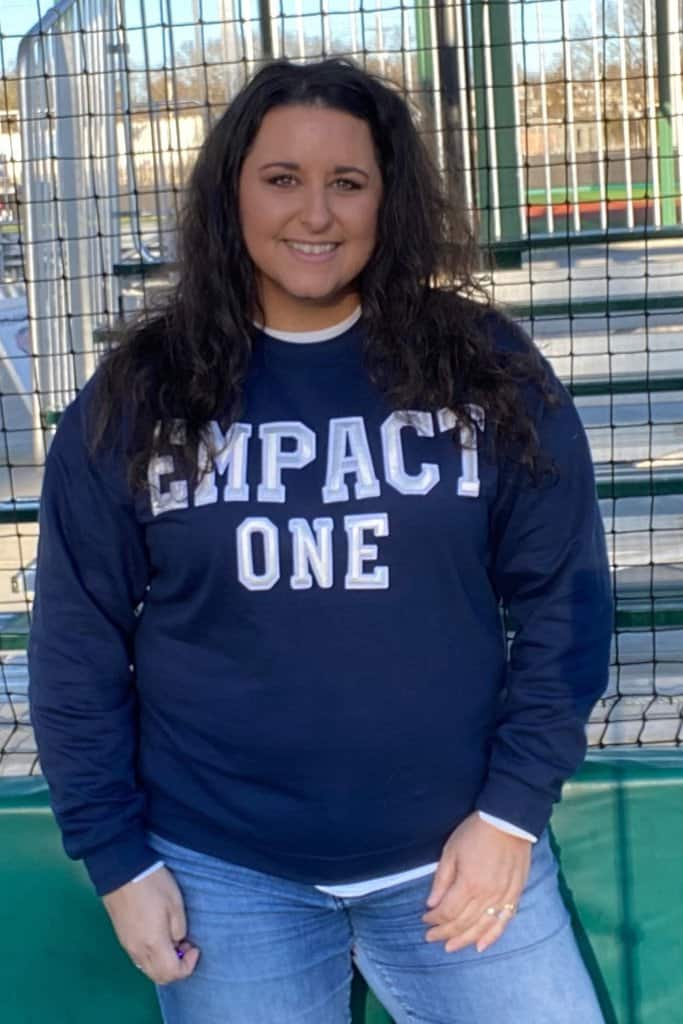
These days Bekka can be found running around Saline County with her husband, Speedy, or chasing one of her grandsons. She is also the Executive Director of The EMpact One Foundation, a Saline County Nonprofit Organization that helps young people stay connected to extracurricular activities through tuition assistance and equipment provisions.
Reach out to Bekka with questions and/or ideas about things you want to see in this column at [email protected] and learn more about The EMpact One Foundation at www.empactone.org.