

How the Ball Bounces with Bekka: Once a Competitor, Always a Competitor
I used to foolishly believe there might come a time when I stopped being so competitive.
Apparently, I was wrong.
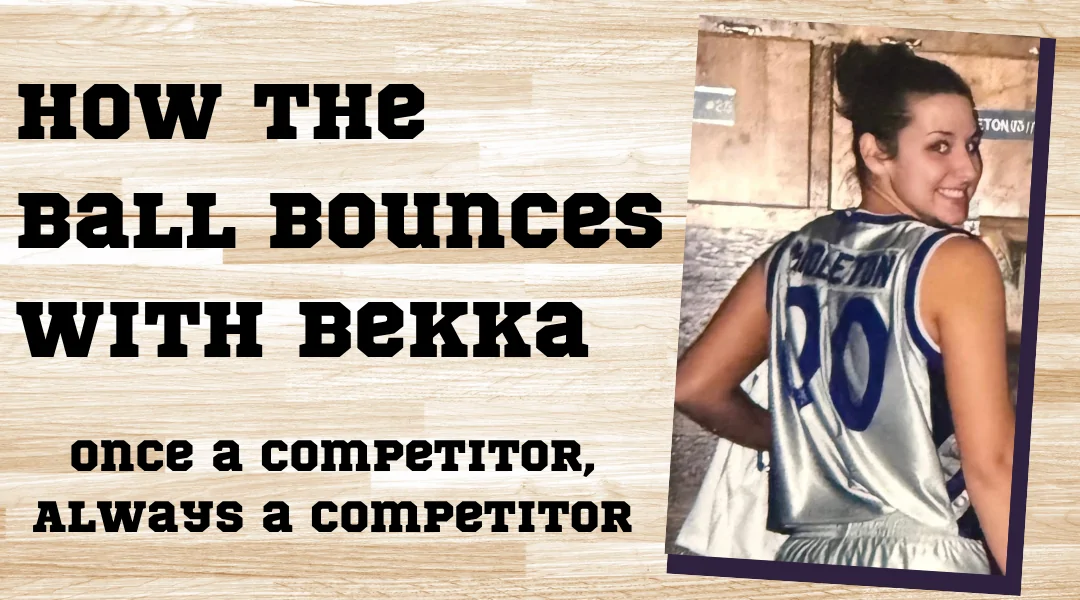
To be fair, I’m still playing basketball. I hauled myself back onto a court for (Not So) Senior Olympics a year or so ago, so apparently I haven’t even technically retired from the sport that started all of this.
And I play golf. I use the term “play” somewhat generously. Am I GOOD at golf? Define “good”. But am I competing? Absolutely. Because athletic ability and my willingness to turn something into a competition are apparently two completely separate things.
The older I’ve gotten, the more I’ve realized the competitive part of my brain has no intention of retiring. It simply keeps finding new sports, or if none are available, it makes them up. Take, for example, grocery shopping.
There is a very specific moment when you are pushing a buggy toward the checkout lanes and realize another shopper is approaching from a different direction.
You see them. They see you. There is one open lane.
And suddenly we’re not at Kroger anymore.
We’re coming down the stretch at Churchill Downs.
Now, I [probably] would never run over somebody with a grocery cart. Let’s establish that. But am I above subtly increasing my pace? Absolutely not.
Game recognizes game, Susan. You should’ve boxed me out.
I spent a lot of years competing.
Scoreboards. Timers. Opponents. Teammates. Coaches. Wins. Losses. Practices where somebody was always keeping track of something.
How many free throws did you make?
How fast did you finish?
Who won the drill?
Who got there first?
Who got the rebound?
Who gets the ball?
For athletes, competition becomes a language. A way of life. And apparently you remain fluent long after anybody actually needs you to be.
That’s how a perfectly normal trip to the grocery store becomes the 100-meter buggy dash. It’s how putting groceries in the car becomes a personal challenge to carry every single bag inside in one trip.
Two trips? Absolutely not.
I played college basketball. I can lose circulation in six fingers for the next 45 seconds. It’s fine.
It’s how driving past the gas station with 11 miles until empty becomes less of a transportation issue and more of an opportunity to find out whether the vehicle manufacturer really meant it. I mean, if they really wanted me to gas up when the tank got low, they wouldn’t have put that little countdown function on the “miles to empty”!
It’s how a casual family board game can reveal character flaws nobody knew existed. And don’t even get me started on anything with a timer. Put a clock on something and I will immediately care 40 percent more.
I don’t even have to know what we’re doing. Stack these cups? Why? Doesn’t matter…start the dang clock!
The funny thing is, I don’t think I’m particularly unusual among athletes. Eventually we just find new things to compete over.
Golf.
Pickleball.
Fantasy football.
Cornhole.
Who can back the boat trailer in faster.
Who can get through airport security first.
Who picked the checkout line that moves fastest.
And some of these things I am significantly better at than others. This has very little effect on how badly I want to win.
Golf may actually be the greatest example of this. There are days when the primary competition is between me and the golf course. There are other days when I’m fairly certain the golf course has won by the third hole and is simply running up the score.
Doesn’t matter. I’m still keeping score.
That last checkout-line competition is especially dangerous because there is nothing you can do once you’ve committed.
You picked Lane 4. Lane 4 has a price check. For the love of all things Holy!
Meanwhile Speedy is cruising through Lane 7 like he has been personally blessed by Sam Walton. And now I have to stand there pretending this doesn’t bother me. Spoiler alert…It does.
READ MORE BELOW
Of course, competition isn’t always this ridiculous. There’s a reason athletes spend so much time learning how to compete. Competition asks something of you. It tests your physical abilities and your mental strength. It makes you reach a little farther, run a little harder, stay a little longer, and try one more time.
It teaches you that losing isn’t fatal, winning isn’t permanent and somebody being better than you today doesn’t mean you stop working tomorrow. That’s useful long after the scoreboard gets turned off.
I think sometimes we talk about competitiveness like it’s a character flaw we eventually need to outgrow. And maybe parts of it do need some adult supervision. Not every conversation needs a winner. Not every disagreement is the fourth quarter.
Your spouse is not an opponent. Neither is your coworker. And the woman pushing the buggy toward the checkout lane probably has absolutely no idea she’s currently involved in a sporting event. That’s an important distinction.
But I don’t think the competitive part of us necessarily needs to disappear.
Maybe it just needs to grow up with us. Maybe age and experience teach us that not every hill is one to die on, even when that little competitive devil on your shoulder is yelling, “GO!”
Because competition was never only about beating somebody else. At its best, it was also about discovering what happened when we asked a little more of ourselves.
Could I make one more?
Could I go a little farther?
Could I get back up?
Could I get better?
Could I do something today that I couldn’t do yesterday?
Those questions still work when nobody is handing out trophies. Maybe that’s why the athlete never completely leaves us…and it shouldn’t.
The arena changes. Sometimes the sport changes. Sometimes we’re still playing basketball decades later. Sometimes we’re standing over a golf ball wondering what that poor little thing ever did to deserve what’s about to happen to it, or why we ever decided to pick up a club in the first place.
Because competition was never only about beating somebody else. Sometimes the person you’re trying hardest to beat is the one you were yesterday. At its best, it was also about discovering what happened when we asked a little more of ourselves.
And sometimes we’re pushing a buggy through the grocery store with absolutely no legitimate reason to care whether we get to the checkout lane first.
But somewhere inside, there’s still that person who hears, “Ready, set…”
…and doesn’t really need to hear “go.”
We’re already moving.
These days I don’t need to win every race. That’s growth. I can celebrate somebody else’s success. I can walk away from an argument. I can admit when someone is better at something than I am.
I’ve matured. A little.
But if you and I turn toward the same open checkout lane at the same time?
Well.
I hope you’ve been training.
And that’s how the ball really bounces.
Read more from How the Ball Bounces with Bekka in the archives at www.mysaline.com/bounces.
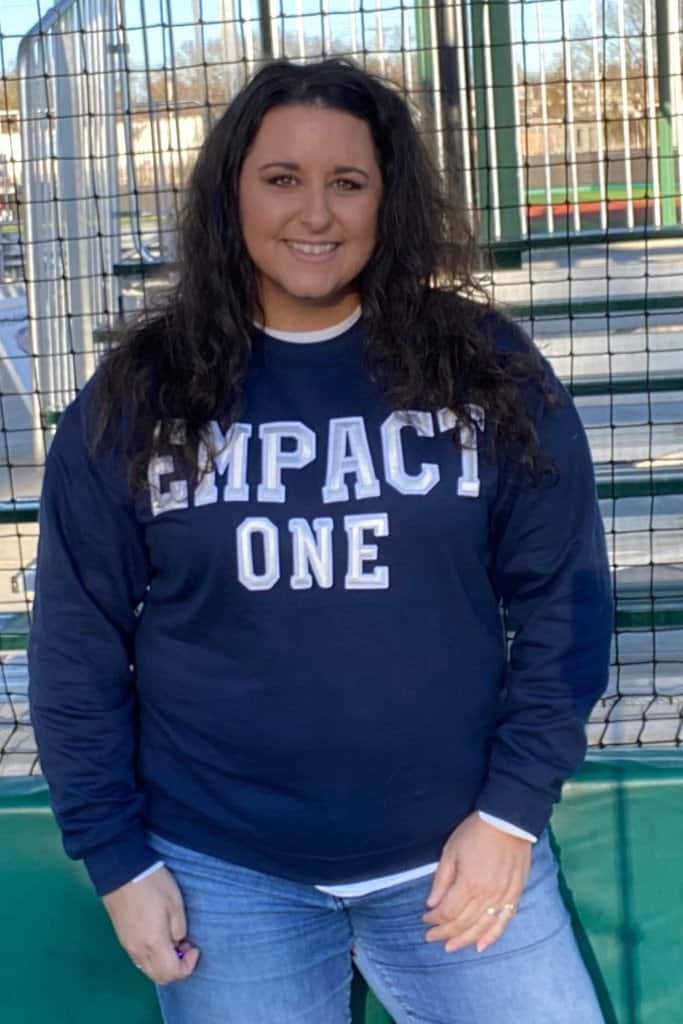
 About the author: Bekka Wilkerson is a lifelong lover of all things sports. Raised in a super athletic household it was no surprise when she too began to love sports at a young age. It seems like from the time she could walk she had a softball bat in her hands, but her true athletic passion came from all things Basketball. That love served her well as a Bryant High School Lady Hornet and ultimately earned her a full scholarship to play at the University of Central Arkansas – among many other adventures.
These days Bekka can be found running around Saline County with her husband, Speedy, or chasing one of her grandsons. She is also the Executive Director of The EMpact One Foundation, a Saline County Nonprofit Organization that helps young people stay connected to extracurricular activities through tuition assistance and equipment provisions.
Reach out to Bekka with questions and/or ideas about things you want to see in this column at [email protected] and learn more about The EMpact One Foundation at www.empactone.org.