

I’ve had a lot of teammates in my life.
Some I haven’t spoken to in years. Some I could probably call tomorrow and pick up a conversation like we had just walked out of practice yesterday.
Everyone had different strengths and weaknesses. Some made me better. Some made me absolutely crazy. And if we’re being completely transparent, I’m relatively certain I returned the favor.
That’s the thing about teammates.
You don’t necessarily choose them. Sometimes you are just flung onto the same court together and told to figure it out. Because in sports, figuring out how to work together isn’t optional, and the trick is to look at the players on the floor, figure out what everyone brings to the game, and find a way to win together. A coach puts a group of people together, hands everybody the same uniform, points toward the same goal and basically says…Figure it out.
And somehow, you do.
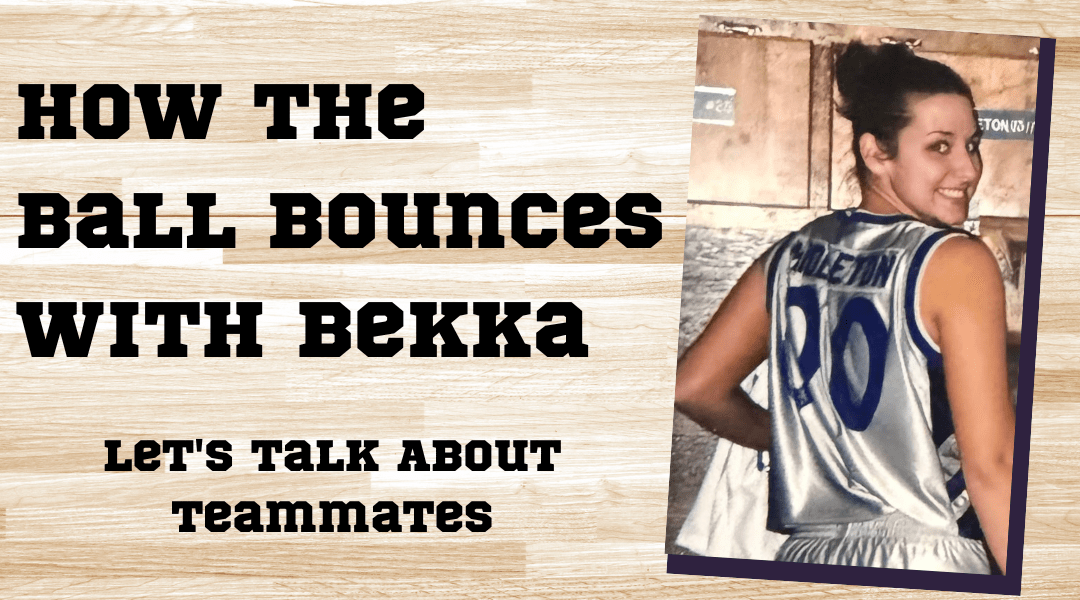
I have very vivid memories of my first season as a Sugarbear at UCA. My first time living on my own, my first time really being away from home, and my first time walking into a brand new reality where I was going to have to find a way to bond with a group of girls from across the country – different backgrounds, different ethnicities, different upbringings – who would become my sisters for the rest of my life…all while fighting for my space, identity, and playing time every day. There was no way, on that first day, I could predict how each of these women would change me, grow me, and leave their mark on me for the rest of my life.
You learn pretty quickly who wants the ball when the game is on the line. You learn who will dive on the floor after a loose ball. You learn who will tell you the truth when you’re playing terribly. You learn who will put an arm around you after a bad game. You learn who celebrates when you succeed…and who has a slightly harder time clapping when they’re sitting on the bench.
You also learn the really hard lessons like who isn’t cut out to share the floor with you. Because wearing the same jersey doesn’t automatically make someone a good teammate. And being on the same team doesn’t always mean everyone in the gym is for you.
That’s a lesson sports taught me early.
Trust matters.
But so does knowing who you’re trusting.
On the basketball court, you have to protect the ball. Keep your body between the defender and what’s yours. Know where the pressure is coming from. See the floor and anticipate what’s ahead.
But here’s the catch…you can’t do it all on your own. That’s where that pesky “team sport” term comes in. At some point you still have to pass the ball.
You can’t play offense standing at half court clutching the basketball to your chest because somebody stole it from you three possessions ago.
Although, after a particularly ugly turnover, I may have considered it.
Eventually, you’ve got to trust somebody enough to make the pass. Even if the person you have to trust let you down on the last play. Because one bad possession doesn’t always make someone a bad teammate. Sometimes people just miss their shot.
I think adulthood works a lot like that.
Relationships are hard.
Friendships. Marriage. Families. Coworkers.
Sometimes trusting people is really hard.
But being alone is hard too.
At some point, you just have to pick your hard.
And I think one of the hardest things about getting older is realizing that not everybody who plays a role in your life is supposed to stay there forever.
Sports prepared us for that too.
As a freshman, you walk into a locker room filled with older players. You move from being the big dog to being a puppy again. Like being the little fish in the big pond wasn’t hard enough the first time…here you go again! And just when you think you’ve finally graduated from that experience, life has a funny way of making you the puppy all over again.
They’re bigger. They’re louder. They know where everything is. They understand Coach’s expectations. They know the plays. They’re comfortable. They belong. Or at least that’s how it looks to the terrified freshman standing in the doorway.
You follow them.
Then the season ends.
The seniors graduate.
And suddenly the people you were following aren’t there anymore. Someone has to fill their shoes. Eventually, you look around and realize…It’s you.
Then, just about the time you’ve figured out how to lead everybody else, your own senior season ends.
You leave behind everything you’ve worked so hard to build, someone else steps forward, and you have to trust the next generation of teammates to keep the ball bouncing.
That’s how teams work.
And that’s how life works too.
READ MORE BELOW
Some people are with us for decades while others are with us for a season. Some walk beside us long enough to teach us something we desperately needed to learn and then move on. That doesn’t necessarily mean the relationship failed. Maybe its season simply ended.
I’ve struggled with that more as an adult than I ever did as an athlete.
I think sometimes we measure relationships by longevity. If someone stays forever, it mattered. If they leave, something must have gone wrong. But I’m not sure that’s true.
I can think of teammates who were incredibly important to me during one particular season of my life even though our lives eventually went in completely different directions.
They mattered then. They still matter to the person I became. And maybe that’s enough.
Of course, there is another side to this whole teammate thing. We spend an awful lot of time wondering whether we have good people in our corner.
Do they support me?
Can I trust them?
Will they show up?
Are they really happy for me?
All fair questions. But somewhere along the way, we probably need to turn those questions around.
Am I a good teammate?
Am I the person who shows up? Can people trust me with the ball? Can I celebrate someone else’s success when I’m sitting on the bench? Can I tell someone the truth without tearing them down? Can I carry a little more of the load when somebody beside me is struggling? Can I let somebody else lead when it’s their turn?
That’s harder.
Because we don’t get to control what kind of teammates other people choose to be. We only get to decide what kind of teammate we’re going to be. And, unfortunately, that’s a much less comfortable question to answer.
And maybe that’s the real lesson.
Protect the ball.
Absolutely.
Learn from the turnovers.
Pay attention to who’s defending you and who’s actually wearing your jersey.
Recognize that not everyone standing beside you is necessarily rooting for you.
But don’t let a few bad passes convince you to stop playing offense.
Keep your head up.
See the floor.
Find your people.
Trust them enough to make the pass.
And when somebody trusts you enough to put the ball in your hands…
Take care of it.
Because seasons change. People come and go. Lineups look different. Eventually, every one of us checks out of the game and somebody else checks in.
Maybe the goal was never to find teammates who would stay forever. Maybe it was to appreciate the ones beside us while they’re there, learn something from the ones who leave, and make darn sure we’re the kind of teammate someone else is grateful they got to play beside.
And that’s how the ball really bounces.
Read more from How the Ball Bounces with Bekka in the archives at www.mysaline.com/bounces.
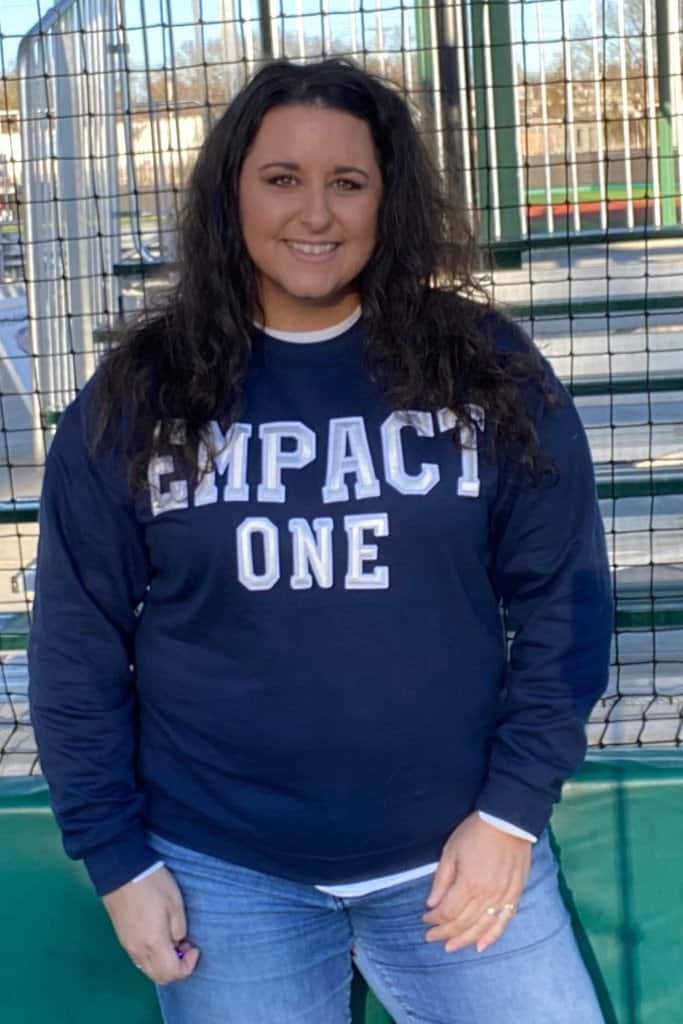
 About the author: Bekka Wilkerson is a lifelong lover of all things sports. Raised in a super athletic household it was no surprise when she too began to love sports at a young age. It seems like from the time she could walk she had a softball bat in her hands, but her true athletic passion came from all things Basketball. That love served her well as a Bryant High School Lady Hornet and ultimately earned her a full scholarship to play at the University of Central Arkansas – among many other adventures.
These days Bekka can be found running around Saline County with her husband, Speedy, or chasing one of her grandsons. She is also the Executive Director of The EMpact One Foundation, a Saline County Nonprofit Organization that helps young people stay connected to extracurricular activities through tuition assistance and equipment provisions.
Reach out to Bekka with questions and/or ideas about things you want to see in this column at [email protected] and learn more about The EMpact One Foundation at www.empactone.org.